Ronroco
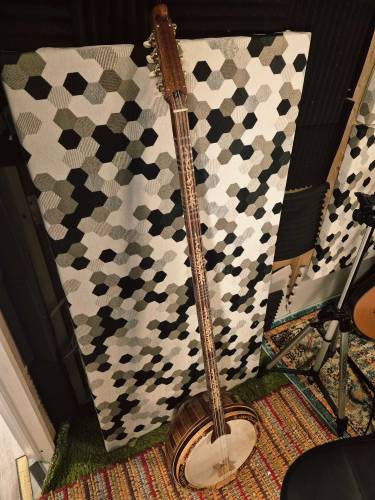
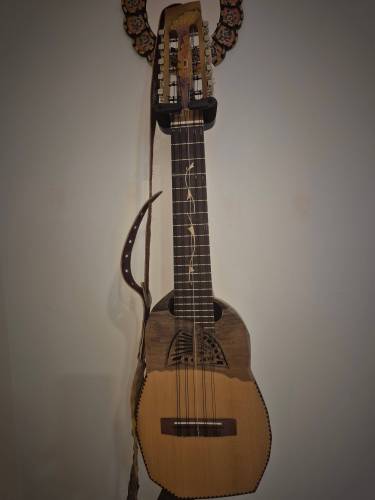
The ronroco is a mesmerizing Argentinian stringed instrument that belongs to the charango family.
It’s larger than a typical charango, with a deeper and warmer tone that makes it uniquely captivating. Traditionally crafted from wood, its body often mimics the shape of an armadillo, paying homage to its historical roots.
The ronroco has ten strings paired in five courses, and its sound is commonly associated with Andean music, bringing a rich, melodic texture to compositions. Its distinctive resonance and versatility make it a favorite for creating atmospheric and emotive pieces, perfect for both traditional and modern genres.
Charango
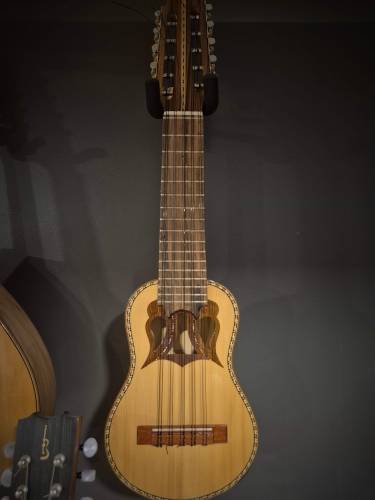
The charango is a fascinating Andean stringed instrument known for its bright and lively sound. It’s much smaller than the ronroco, making it portable and perfect for intricate melodies.
Traditionally, the charango’s body was crafted from an armadillo shell, but modern versions are more often made of wood. It typically features ten strings arranged in five pairs, producing a rich and resonant tone.
The charango is widely used in traditional Andean music, adding a cheerful and rhythmic element to compositions. Its versatility also allows it to shine in contemporary genres, offering both harmonic support and melodic brilliance.
Portuguese Guitar
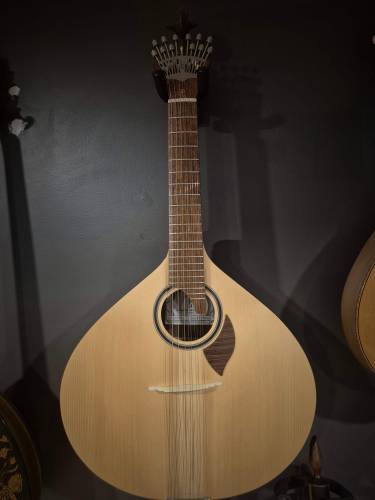
The Portuguese guitar is a stunningly unique stringed instrument that stands as a symbol of Portuguese culture, particularly associated with the soulful music of Fado.
Its pear-shaped body is adorned with intricate details, and it typically has 12 steel strings arranged in six courses. What sets it apart is its characteristic tuning and the use of thumb and fingerpicks, allowing for intricate and expressive melodies.
The Portuguese guitar produces a bright yet melancholic tone, perfectly complementing the emotional depth of Fado performances. It’s also used in other genres, showcasing its versatility and timeless beauty.
Portuguese Viola da Terceira
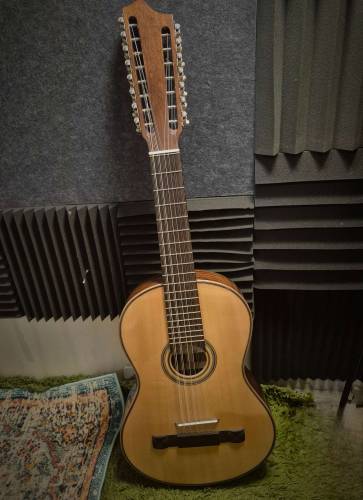
The 15-string Portuguese Viola da Terceira is a rare and enchanting instrument hailing from the Azorean island of Terceira.
This guitar-like instrument stands out with its unique arrangement of 15 strings grouped into 6 courses, offering a rich harmonic palette.
Traditionally, the viola da Terceira is used in folk music, adding a warm and resonant sound to gatherings and celebrations. Its craftsmanship often features beautiful, ornate designs that reflect the cultural pride of the Azores.
The instrument’s distinctive tuning and timbre make it a prized choice for creating complex, melodious compositions.
Octave Mandolin
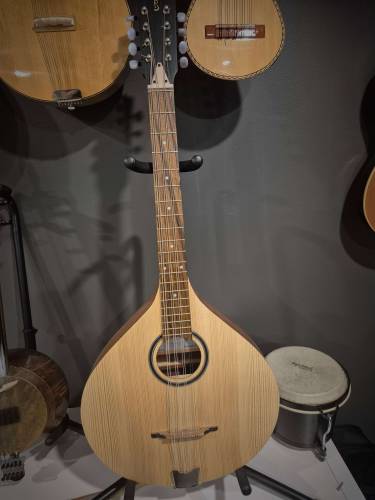
The octave mandolin is a larger and deeper-voiced member of the mandolin family, offering a rich and resonant tone.
With its eight steel strings arranged in four courses, it’s tuned one octave below the standard mandolin, giving it a fuller and more robust sound. Its versatility makes it a favorite in folk, Celtic, and even classical music, where it provides harmonic depth and melodic warmth.
The octave mandolin’s craftsmanship often highlights its elegance, making it not only a wonderful instrument to play but also a beautiful piece to behold.
Algerian Mandole
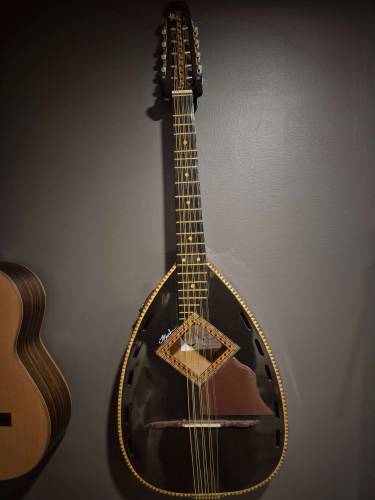
The Algerian mandole is a captivating stringed instrument deeply embedded in North African music, particularly in Algeria. It features an oval body, a long neck, and double courses of metal strings, typically ranging from 8 to 10.
A key characteristic of the Algerian mandole is its inclusion of quarter-tone frets, which allows for the nuanced microtonal scales commonly found in North African and Middle Eastern music traditions.
Played with a plectrum, it produces a rich and resonant sound, blending intricate melodies and rhythmic accompaniments. The mandole plays a central role in genres like Chaâbi and Andalusian music, bridging traditional and modern influences. Its elegant craftsmanship often includes ornamental details, reflecting its cultural heritage.
Arabic Oud
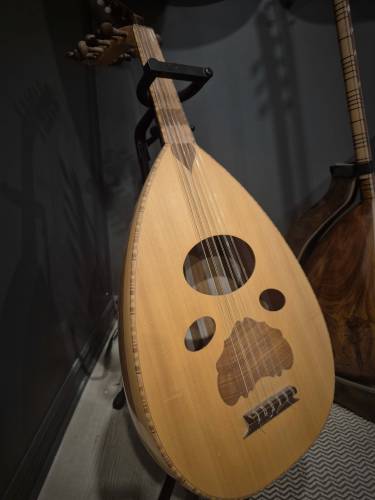
The Arabic oud is a revered stringed instrument and one of the cornerstones of Middle Eastern music. Known for its pear-shaped body and short neck, it typically features 11 or 13 strings arranged in pairs or groups, providing a rich and sonorous tone.
Unlike fretted instruments, the oud has a fretless fingerboard, allowing for smooth glissandos and the execution of microtones that are essential to traditional Arabic music.
Played with a plectrum, known as a “risha,” the oud is celebrated for its deep expressiveness and versatility, capable of conveying everything from intricate melodies to powerful improvisations. Its timeless design and exquisite craftsmanship make it a symbol of cultural heritage across the Arab world.
Arabic Bouzouki
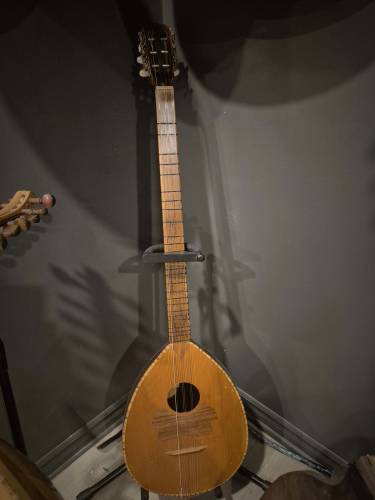
The Arabic buzuq is a long-necked stringed instrument, cherished for its role in traditional Middle Eastern music. Typically featuring a slender, fretted neck and a pear-shaped wooden body, it has two or three courses of strings, often totaling six or seven strings.
The buzuq is played with a plectrum and is known for its bright, clear, and intricate sound, making it ideal for both melodic and rhythmic accompaniment.
Its frets, which can be adjusted, allow for the execution of microtones essential to Arabic maqams (musical modes). The buzuq’s unique tonal qualities and expressive range make it a beloved instrument in both folk and classical Arabic music.
Greek Bouzouki
The Greek bouzouki is a quintessential instrument of Greek music, renowned for its bright, metallic tones and rapid melodic runs. It features a long, fretted neck and a rounded wooden body, often beautifully adorned.
The bouzouki traditionally has three courses of double strings (six strings total), though modern versions often have four courses (eight strings total), offering enhanced versatility.
Played with a plectrum, it is central to genres like Rebetiko and Laïkó, infusing them with its distinctive sound. The bouzouki’s expressive nature and unique timbre make it a powerful tool for conveying emotion and energy in music.
Turkish short neck bağlama - kısa sap bağlama
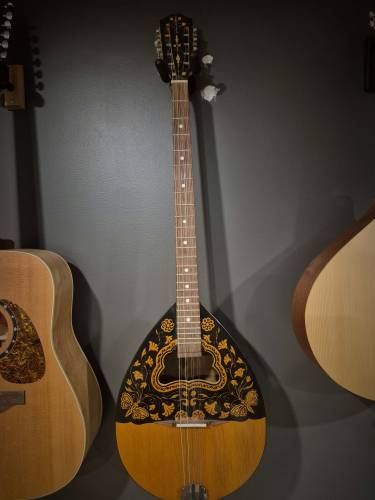
The Turkish short-neck baglama, known as the “kısa sap bağlama” in Turkish, is a beloved stringed instrument with deep roots in Turkish folk music.
It features a teardrop-shaped wooden body and a shorter neck compared to the long-neck version. Typically, it has seven strings divided into three courses, with the courses tuned in various combinations depending on the regional style or player’s preference.
The frets are tied and movable, allowing for the use of microtones that are essential to Turkish maqams. Played with a thin plectrum called a “tezene,” the baglama produces a warm, resonant, and intricate sound that complements both melodic and rhythmic elements of traditional and contemporary Turkish music.
Turkish long neck baglama - uzun sap bağlama
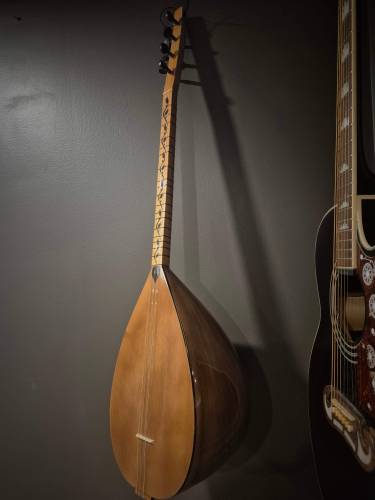
The Turkish long-neck baglama, known as the “uzun sap bağlama” in Turkish, is a prominent instrument in Turkish folk music, celebrated for its versatility and rich sound. It has a teardrop-shaped wooden body and a longer neck compared to the short-neck version, which allows for a broader range of notes.
The baglama typically features seven strings divided into three courses, and its tied, movable frets facilitate the use of microtones essential to Turkish maqams.
Played with a plectrum called a “tezene,” the uzun sap bağlama delivers a warm, resonant tone, perfectly suited for both intricate melodies and rhythmic accompaniment in traditional and contemporary styles.
Divan Saz
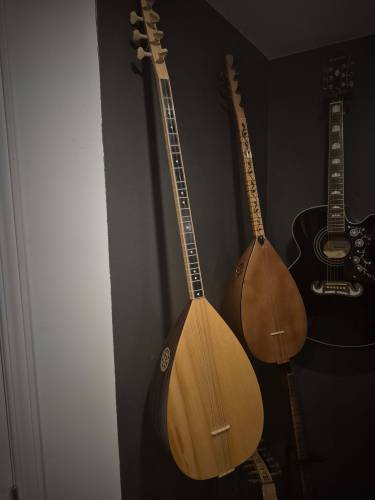
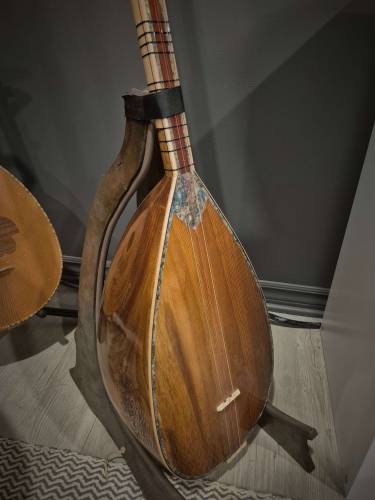
The Divan Saz, known as the “Divan Bağlama” in Turkish, is one of the largest and longest-necked instruments in the bağlama family. Its extended neck allows for a greater number of tied frets, enabling it to play a wide range of notes and microtones essential to Turkish maqams.
The instrument typically has seven strings grouped into three courses, and it is played with a plectrum called a “tezene.” The Divan Bağlama produces a deep, resonant, and powerful sound, making it ideal for performing epic and expressive pieces in traditional Turkish folk music.
Classical Nylon Guitar
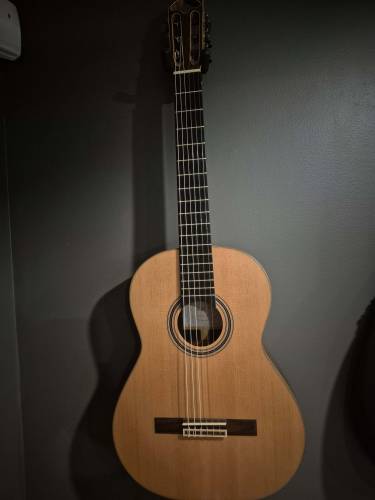
The classical nylon guitar is a timeless stringed instrument, known for its warm, mellow tones and elegant design. It typically has six nylon strings, which produce a softer and more resonant sound compared to steel-string guitars.
With a wider neck and a flat fingerboard, the classical guitar is ideal for fingerstyle playing, allowing musicians to perform intricate melodies and harmonies. Its versatility spans genres like classical, flamenco, and Latin music.
Crafted with a wooden body, often featuring spruce or cedar for the top and rosewood for the back and sides, the classical guitar exemplifies both functionality and beauty.
12 strings Steel Acoustic Guitar
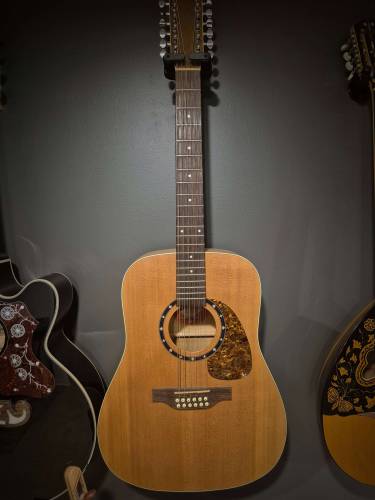
The 12-string steel acoustic guitar is a remarkable instrument known for its rich, full-bodied sound. It features 12 steel strings arranged in six courses of paired strings, with each pair tuned in octaves or unisons.
This configuration creates a lush, chiming effect that adds depth and resonance to the music. The 12-string guitar is popular in genres like folk, rock, and blues, where its unique tonal qualities enhance both rhythm and melodic passages.
Typically built with high-quality woods such as spruce, mahogany, or rosewood, its craftsmanship ensures both durability and a warm, resonant tone.
Persian Kamancheh
The Persian kamancheh is an exquisite bowed string instrument, deeply rooted in Persian classical music. With its elegant, spindle-shaped body traditionally crafted from wood or gourd, and a skin membrane stretched over its soundbox, the kamancheh produces a rich and soulful tone.
It typically has four metal strings, and its fretless neck allows for fluid glissandos and the execution of microtones essential to Persian musical modes, or dastgahs.
Played upright with a bow, the kamancheh’s sound is expressive and hauntingly beautiful, making it a centerpiece in Persian ensembles and solo performances alike.
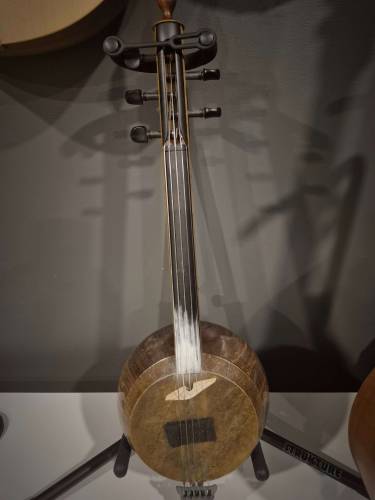
Azeri Kamancheh (5 strings)
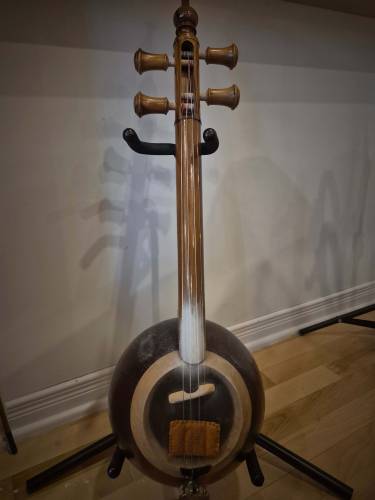
The 5-string Azeri kamancheh is a deeply expressive bowed string instrument, integral to Azerbaijani music. It features a round wooden body with a skin membrane stretched over the soundboard, giving it a resonant, melancholic tone.
Unlike its Persian counterpart, this version has five metal strings, adding to its tonal range and versatility. The fretless neck allows for fluid slides and the precise execution of mugham, the traditional modal system in Azerbaijani music.
Played upright with a bow, the Azeri kamancheh is celebrated for its rich, soulful sound, capable of both intricate melodies and emotional depth.
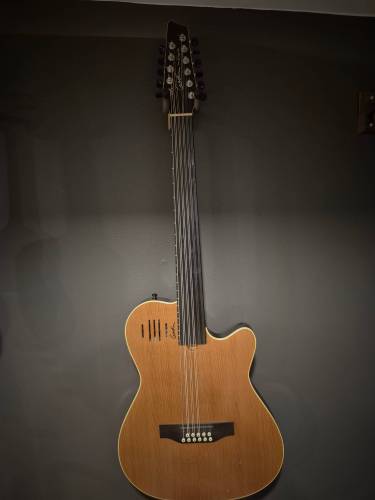
Guitar-Oud Hybrid (Godin Glissentar)
The Godin Glissentar is a unique and innovative instrument that blends elements of the guitar and the oud, creating a fascinating fusion of Eastern and Western musical traditions. It features 11 nylon strings and a fretless fingerboard, allowing for microtonal playing and smooth glissandos reminiscent of the oud.
The Glissentar has a two-chambered body made of silver leaf maple with a solid cedar top, offering a warm and resonant tone.
Equipped with custom Godin electronics, it can be played acoustically or amplified, making it versatile for various musical styles. This instrument is perfect for adventurous musicians seeking to explore new sonic landscapes.
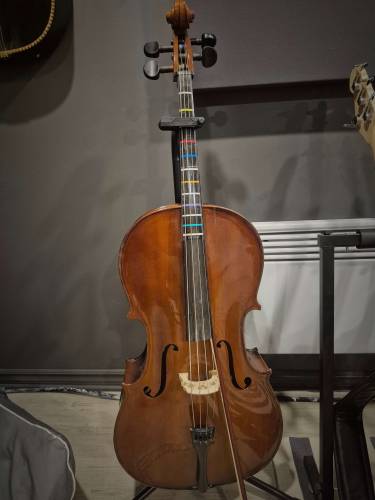
Cello
The cello is a majestic stringed instrument that stands out with its deep, sonorous voice and versatility. Larger than the violin and viola but smaller than the double bass, it is played upright and typically has four strings tuned to C, G, D, and A.
The cello’s rich, warm tones make it a favorite for conveying emotion in classical music, chamber ensembles, and orchestras. Its range spans from the lowest bass notes to lyrical tenor melodies, offering incredible expressive depth.
Whether performing intricate solo pieces or supporting harmonies, the cello’s beauty and elegance make it a cherished cornerstone of musical composition and performance.
Armenian Duduk
The Armenian duduk is a traditional double-reed woodwind instrument with a rich history and cultural significance in Armenia. It’s known for its distinctive, haunting sound and is often used in Armenian folk music, ceremonies, and celebrations. The duduk’s unique timbre and expressive qualities have made it an integral part of Armenian musical heritage.
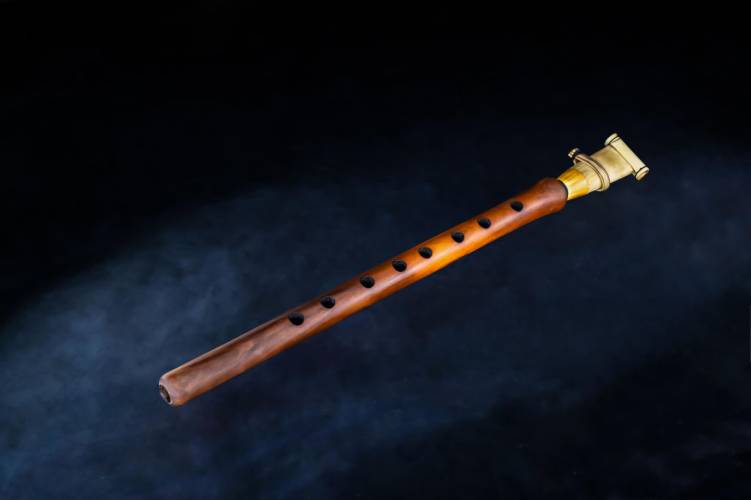
Arabic Ney
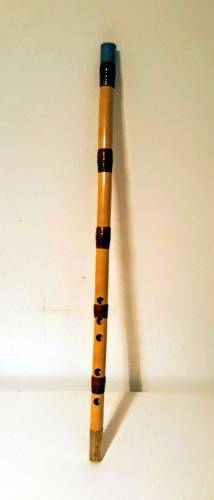
The Ney is a traditional Middle Eastern wind instrument made from a hollowed-out cane or bamboo. It is one of the oldest instruments in the world, with roots dating back over 4,500 years. The Ney has a distinctive, ethereal sound that is produced by blowing air across the top of the instrument. It typically has six or seven finger holes and is used in various genres of Arab, Turkish, and Persian music. The Ney is known for its deep, soulful tone and is often associated with Sufi music and spiritual rituals, symbolizing a connection to the divine.
Turkish Bowed Tambur (Yayli Tambur)
The Turkish yaylı tambur is a bowed long-neck lute known for its hauntingly expressive sound and microtonal capabilities. Originating from Turkey, it evolved from the plucked version called mızraplı tambur and is a staple in Turkish classical music.
Its rich, resonant tone and ability to slide seamlessly between notes make it a favorite for conveying deep emotion and nuance in traditional compositions.